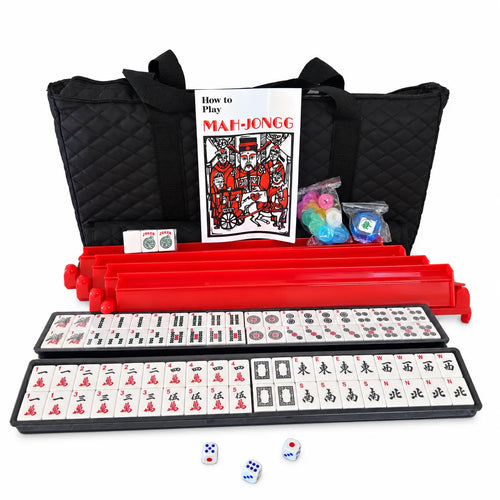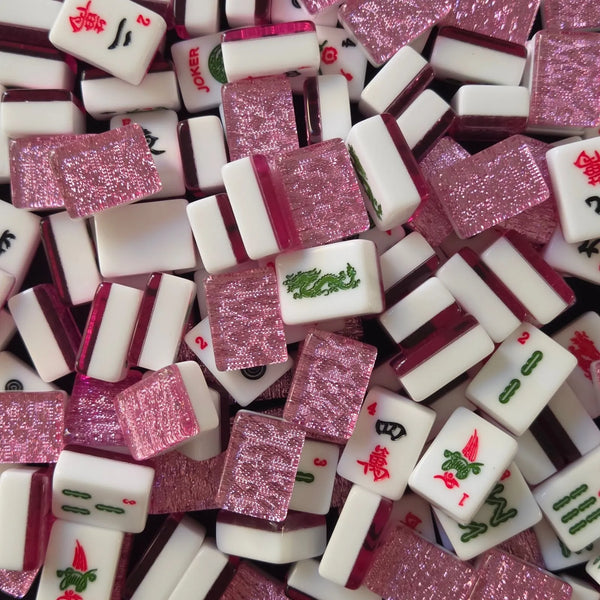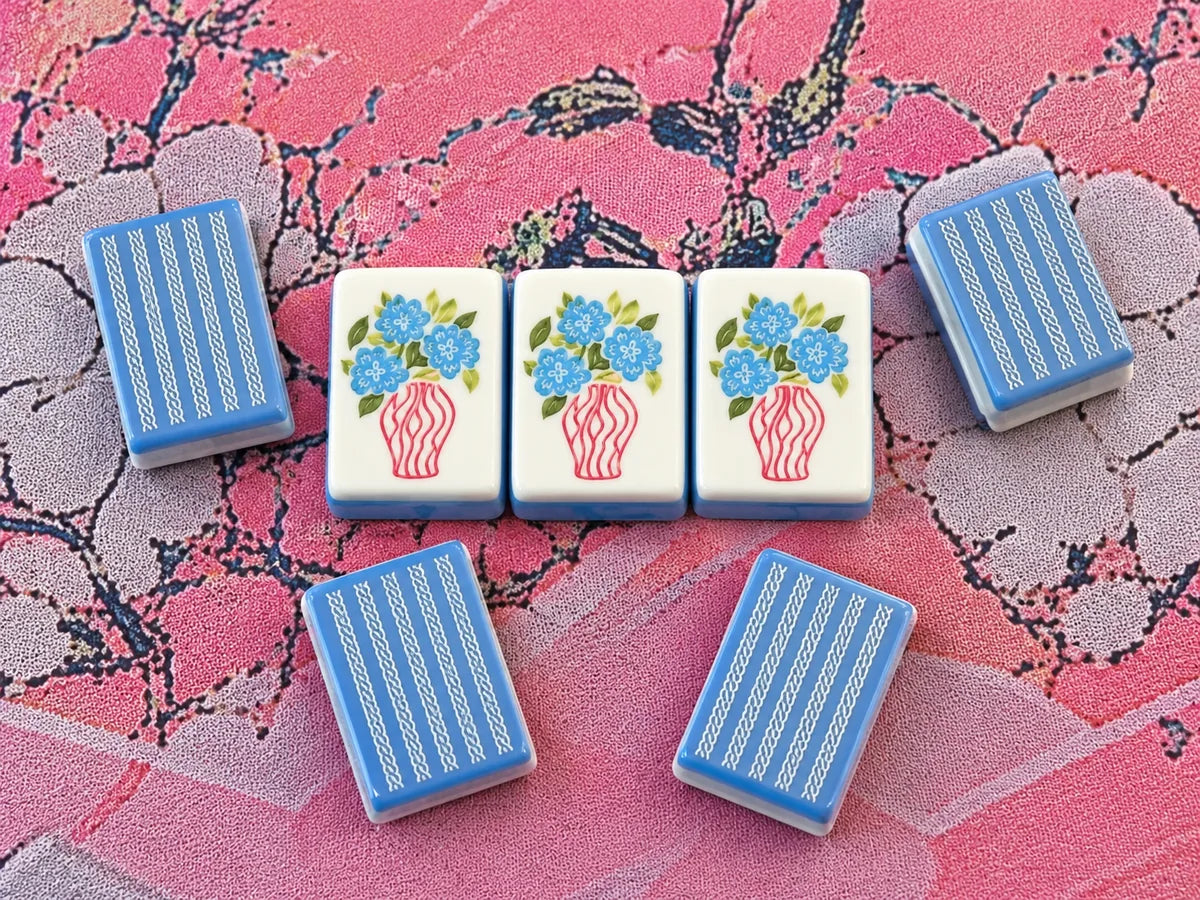
A pung is three identical tiles, like three 5 Dots or three Red Dragons. In American Mah Jongg it's the smallest group you can claim from another player's discard, and once you call it, it goes face up on your rack.

Free printable guide
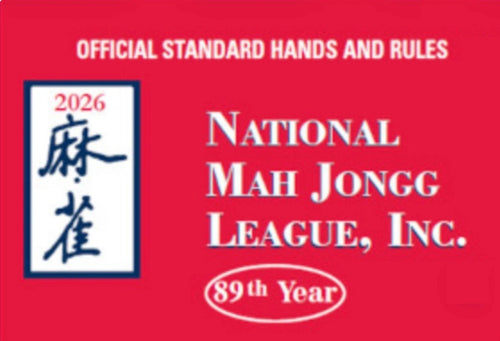
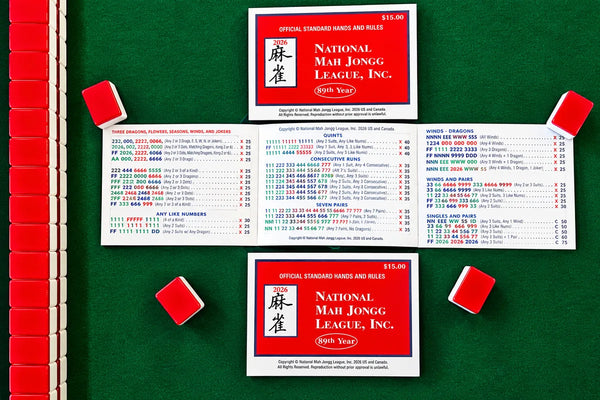
How to Read the NMJL Card
A layout guide to keep beside your official card. It explains the card; it does not reprint it.
Download the PDF See all guidesFour identical tiles is a kong. Five is a quint. Those three words cover most of what's printed on the National Mah Jongg League card, so they're worth learning before anything else.
The groups, smallest to largest
- Single: one tile
- Pair: two identical tiles
- Pung: three identical tiles
- Kong: four identical tiles
- Quint: five identical tiles
- Sextet: six identical tiles
"Identical" is the word that trips people up. A 4, 5, 6 of Dots is three singles, not a pung. North, East, West and South is four singles, not a kong. It has to be the exact same tile.
A set has four of each suit tile, Wind and Dragon, so a quint of any of those needs at least one Joker. Flowers are the exception: there are eight of them, so you can make a quint of Flowers without a Joker. If any of these terms are new, keep our Mah Jongg glossary and tile symbols guide handy.
Calling a pung, kong or quint
When someone discards a tile you need to finish a group, say "call" (many players just say "pung!") before the next player draws. Take the tile, put the finished group face up on your rack, then discard to end your turn. That's an exposure.
If two players call the same tile, the one who can declare Mah Jongg with it wins the call. Otherwise it goes to whoever's turn comes next.
You can only call for a single or a pair when that tile completes your Mah Jongg.
Exposed (X) or concealed (C)
Every hand on the card is marked X or C. On an X hand you may call discards to finish pungs, kongs and quints. On a C hand you have to draw every tile yourself, except the last one that gives you Mah Jongg. Expose a group on a C hand and your hand is dead.
The real decision is when to expose on an X hand. Every exposure tells the table what you're building, and good players stop throwing what you need. A sound habit: call when the group is one your hand can't do without and the tile may not come round again. Wait when you still have other options on the card. Our guide to reading the 2026 NMJL card shows where the X and C sit on each line.
Dolores's tip
Before calling a tile, check that your hand allows exposures and that you can expose the complete group. Once you expose, you narrow your options.
Where Jokers fit
A Joker can replace any tile in a pung, kong, quint or sextet, and a group can even be all Jokers. A Joker can never be used in a single or a pair, can't be passed in the Charleston, and can't be claimed once it's discarded.
Keep in mind that exposed Jokers are fair game. If you expose three Green Dragons made of two Dragons and a Joker, any player holding the real Green Dragon can trade it for your Joker on her turn. Our guide to Jokers has more on when to hold and when to swap.
Do pungs and kongs change the payout?
Not directly. The payout comes from the value printed next to the hand on the card, and harder hands, often the ones with quints or concealed groups, are worth more. If you win on a discard, the player who threw it pays double and the others pay the card value. If you draw your own winning tile, everyone pays double. A hand made with no Jokers doubles again, except Singles and Pairs hands, which never use Jokers. See worked examples in our scoring guide.
Practice at home
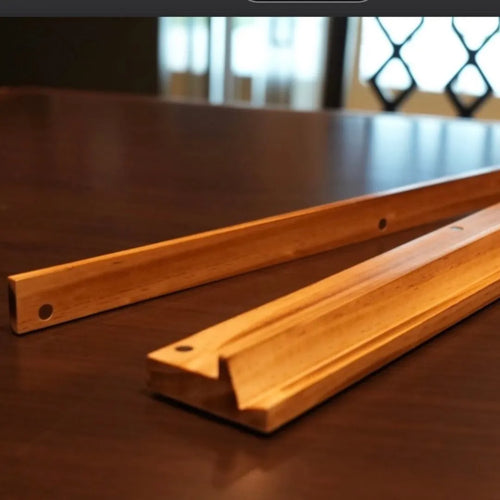
Lay out a complete American set with the 2026 card and build a few hands from it, saying each group's name as you go. Longer racks like our 19-inch wooden racks give you room to keep the groups apart.
Common questions
What's the difference between a pung and a kong?
A pung is three identical tiles; a kong is four.
Can you use a Joker in a pung?
Yes. Jokers work in pungs, kongs, quints and sextets, but never in a single or a pair.
Can you call a discard for a pair?
Only if that tile completes your Mah Jongg.
What's a quint in Mah Jongg?
Five identical tiles. Unless it's Flowers, a quint always needs at least one Joker.
Related reading