Three players at the table, one empty chair. Good news: you can absolutely play American mah jongg with three people, and the game itself does not change. The setup changes a little, the Charleston goes away under official rules, and play proceeds exactly as it would with four.
The short version: build all four walls as usual, leave the fourth wall untouched as the "ghost" seat, deal to the three real players, skip the Charleston, and start play with East discarding the 14th tile. Everything after that is regular mah jongg.
Can You Play American Mah Jongg With 3 Players?
How to play American mahjong with 3 players: build four walls, skip the Charleston per NMJL rules, deal the same way, and play on as usual.

Free printable guide
Playing with Three (and Two)
One chair empty? Two of you on a quiet afternoon? You can still play.
Download the PDF See all guidesSet Up Four Walls, Not Three
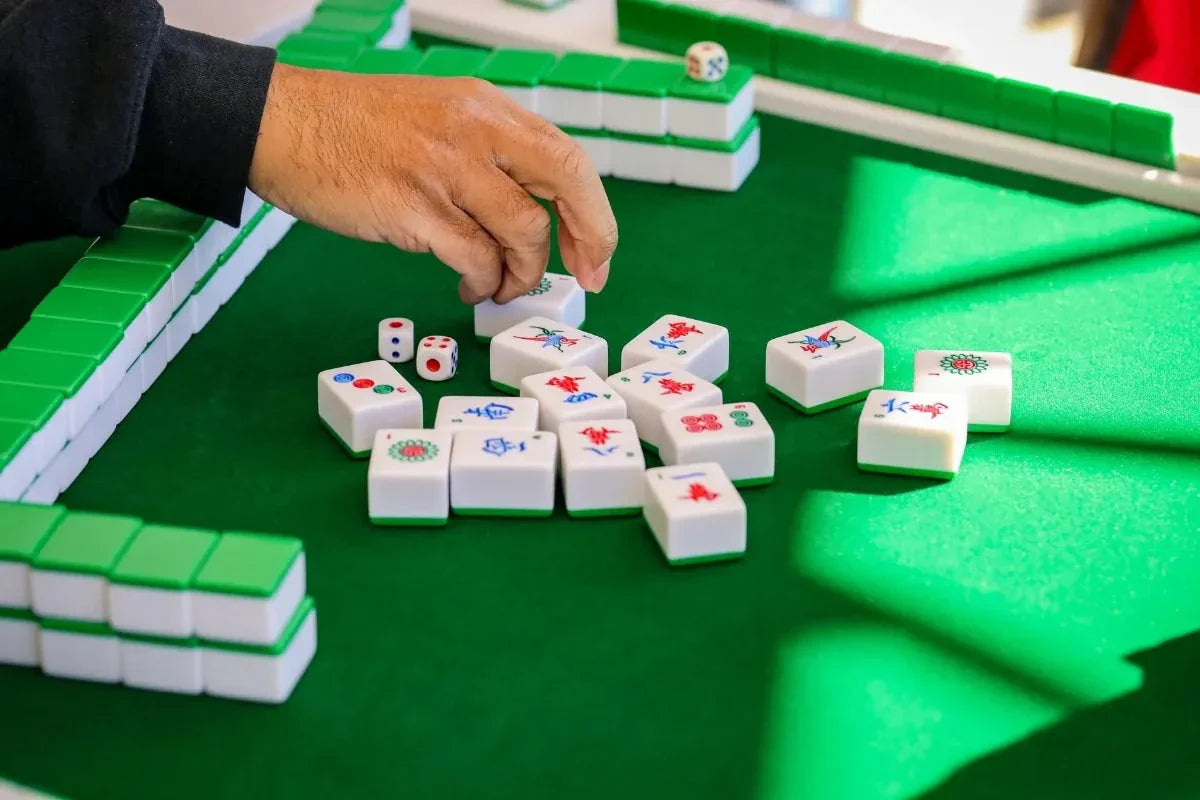
Build the walls exactly as you would for a four-player game: shuffle all the tiles face down, then each player builds a wall two tiles high in front of their rack. The empty seat gets a wall too. That fourth wall belongs to the ghost player, sometimes called Bob or Sally, and it is a real wall that comes into play during the deal.
The ghost wall is dealt no tiles. It sits there, a full wall, and enters the game when the walls start coming out in turn order, just like any other wall. Walls come out in the same order as a four-player game regardless of player count: dealing and drawing proceed counterclockwise around the table, and the empty seat does not change the direction.
Roll the dice to determine East as usual. East breaks their own wall by counting in from the right the number shown on the dice, and the deal proceeds from there.

Deal to Three Players
Dealing works the same way with three players. Each player takes four tiles at a time, going around until everyone has twelve. Then the final draw: East takes one tile from the wall, each other player takes one tile, and East takes a second tile. East starts with fourteen tiles, the other two players with thirteen, and the ghost is dealt nothing.
From this point the only difference is that there are three hands drawing from the walls instead of four. That means slightly more tiles per player over the course of the game, which most players find makes three-player games a little faster and a little looser than four-player games.
Skip the Charleston With Three Players
Under National Mah Jongg League rules, there is no Charleston in a three-player game. With only three players passing, the Charleston would give an unfair information advantage, so the official rule is simple: skip it. East begins play by discarding the 14th tile, and the game proceeds counterclockwise from there.
This is the rule that surprises most players, because the Charleston feels like such a core part of the game. But the reasoning is sound: the Charleston exists to redistribute tiles among four players, and with a ghost seat in the mix, the passing math breaks down. Play a few three-player games without it and the faster start feels natural.
One common house rule: some groups do play a Charleston with three players, using tiles lined up from the ghost wall for the passes to and from the empty seat. The NMJL does not endorse this; it is a table rule, so agree on it before the first deal if your group wants it. If you play strictly by the book, there is no Charleston and no courtesy pass either, since the courtesy pass is part of the Charleston sequence.

Play Proceeds Normally
Once East discards to start, everything is standard American mah jongg. Turns move counterclockwise: draw a tile from the wall, decide whether it fits your hand, discard one tile face up and name it. You may claim discards to complete pungs, kongs, and quints, exposing them on your rack, and you may claim a single or pair only for mah jongg.
The ghost seat does nothing during play. No one draws for it, discards for it, or calls on its behalf. Its wall simply becomes part of the wall rotation when its turn comes. Some groups place a spare rack at the empty seat as a visual reminder; others just leave the chair empty. Either way, the game plays like a normal game with one quiet corner.
Because three players draw from the same walls, games tend to run a few minutes shorter than four-player games. Hands complete a little faster, and the wall runs out a little sooner. Adjust your pacing accordingly: with fewer opponents discarding, you will see fewer tiles you can call, so concealed-friendly hands and flexible sections of the card do well in three-player games.
Gear for a Three-Player Table
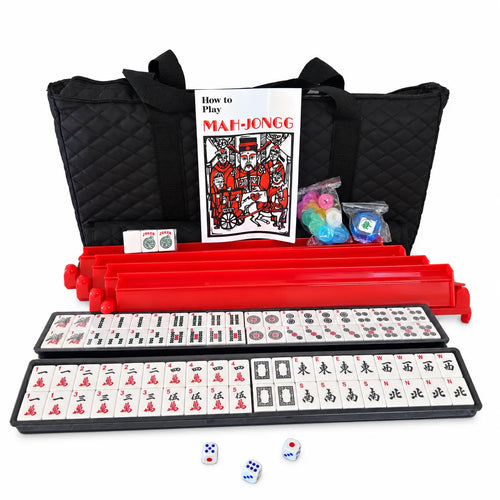
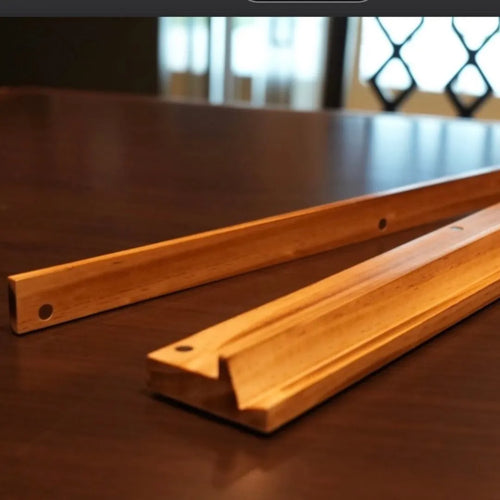
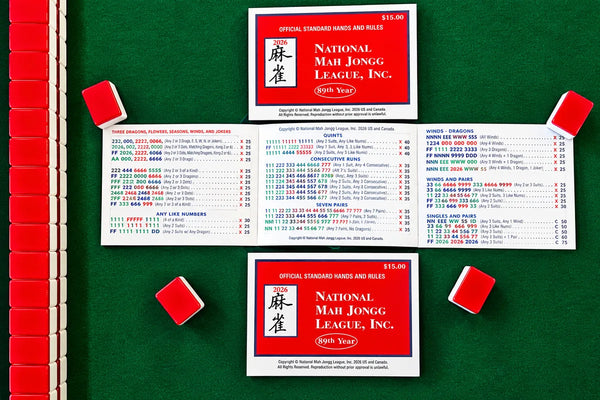
You need the same equipment as a four-player game: a full tile set, three racks with pushers, dice, and current cards for each player. The complete American mahjong set covers the tiles, and a set of four wooden racks with pushers leaves you a spare for when the fourth player shows up. Every player still needs their own 2026 National Mah Jongg League card, and a neoprene table mat keeps the smaller table footprint quiet and tidy.
Three Is Plenty
Do not cancel game night over one missing player. Build the fourth wall, skip the Charleston, and play. Three-player mah jongg is faster, a touch looser, and every bit as satisfying as the four-player game.
Set the table for three, keep the cards current, and enjoy the extra elbow room.
Shop this post
Three-Player Questions
Can you play American mahjong with 3 players?
Yes. Build all four walls, leave the fourth wall as an undealt ghost seat, deal to the three real players exactly as usual, and play on. The only official rule change is skipping the Charleston.
Do you do the Charleston with 3 players?
No, not under NMJL rules. The League's three-player rules skip the Charleston entirely, and East starts the game by discarding the 14th tile. Some groups add a Charleston as a house rule using tiles from the ghost wall, but that is a table rule, not the official one.
How do the walls work with 3 players?
All four walls are built, including one at the empty seat. The ghost wall is dealt no tiles and no one plays from that seat, but the wall enters the rotation normally when the walls come out in turn order. Dealing and drawing proceed counterclockwise exactly as in a four-player game.
What is the ghost player in mahjong?
The ghost, sometimes called Bob or Sally, is the name for the empty fourth seat in a three-player game. It is not a player: it gets no tiles, makes no passes, and takes no turns. The term just gives the group a way to talk about the fourth wall.
Who starts the game in 3-player mahjong?
East, determined by the dice roll as usual. East starts with fourteen tiles after the deal and begins play by discarding one tile, since there is no Charleston. Play then continues counterclockwise to the next player.
Is 3-player mahjong harder than 4-player?
It plays a little differently rather than harder. With three players drawing from the same walls, each player sees more tiles, games run slightly faster, and you get fewer chances to call discards. Flexible hands and concealed-friendly sections of the card tend to do well.
How many tiles do you use for 3-player Mah Jongg?
All of them. You still build four walls with the full set of tiles; the empty seat just is not dealt a hand.