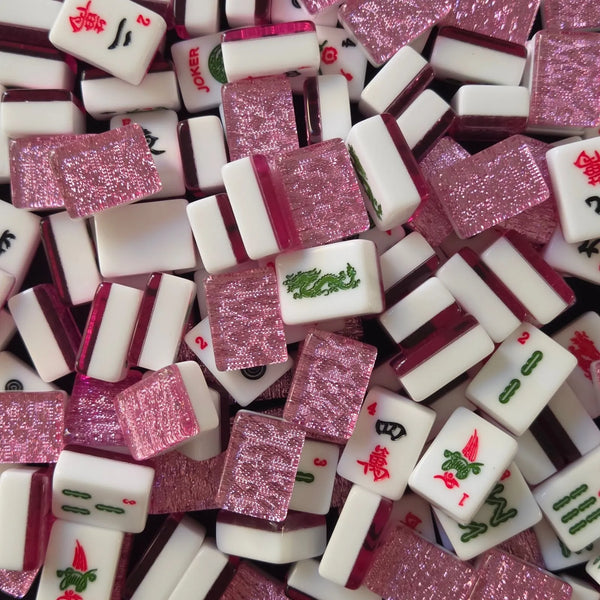
Every dragon in American mah jongg has a partner suit. Red dragons go with craks, green dragons go with bams, and white dragons (called soaps) go with dots. That is the whole pairing, and it is the key to reading any hand on the National Mah Jongg League card that mentions dragons.
Why it matters: many hands ask for a "matching dragon," which means the dragon that belongs to the suit in that grouping. Play the wrong dragon and the hand is dead. Learn the three pairings once and the card's dragon hands become straightforward.
Which Dragon Goes Where?
Which dragon goes with which suit in American mah jongg? Red pairs with craks, green with bams, white with dots, plus the soap-as-zero rule.

Free printable guide
Dragons, Suits and Jokers at a Glance
Every tile in an American set, what it is called and where it belongs.
Download the PDF See all guidesThe Three Pairings
American mahjong has three suits, numbered 1 through 9: dots (circles), bams (bamboo), and craks (characters). It also has three dragons, four of each, and each dragon partners with one suit:
When a hand shows craks and calls for the matching dragon, it wants reds.
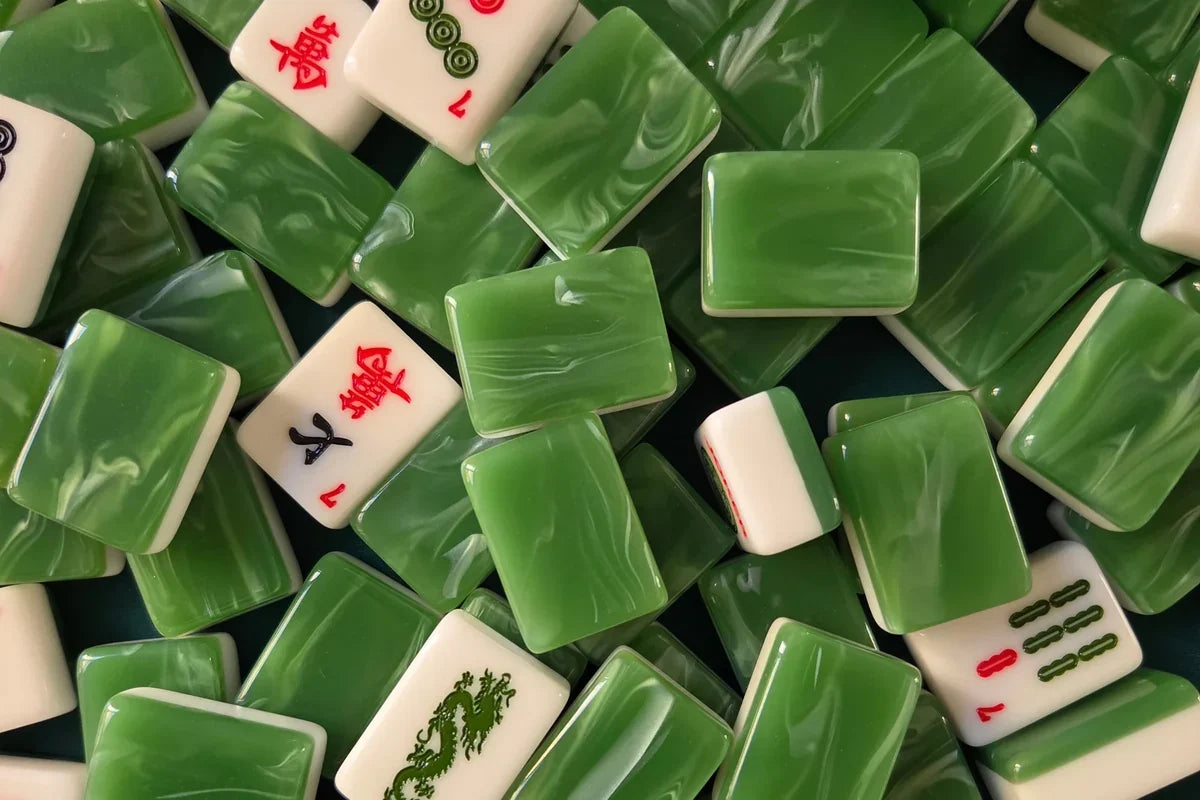
Bams pair with greens. (The 1 bam tile often shows a bird, which is why some players call it the bird bam; it is still a bam, and its dragon is still green.)
The white dragon is the blank-faced tile players nickname the soap. When a hand shows dots and calls for the matching dragon, it wants soaps.
The card itself states the rule plainly: craks with reds, dots with whites, bams with greens. When you see "D" for dragon on a hand, check which suit sits beside it in the same color group, and that tells you which dragon the hand requires.
Opposite dragons show up too. Some hands ask for dragons that do not match the suit, the "opposite dragon" hands. The card tells you exactly which dragon it wants in each grouping, so follow the card rather than the pairing rule in those cases. The pairing rule is the default; the card's specific instruction always wins.

The Soap Is Also the Zero
The white dragon has a second job. In year hands, the soap stands in for the zero, and the card marks it with a 0. When a soap is used as a zero, it becomes neutral: it has no suit and may be combined with any suit in the hand.
This is the one exception to the pairing rule, and it confuses beginners every year. A soap used as a zero in a 2026 year hand is not acting as the dot dragon; it is acting as a number. Treat it as suitless and the year hands read cleanly. Any time you see a 0 on the card, reach for a soap regardless of the suits around it.

Card Colors Are Not Suits
Here is the companion rule that unlocks the card: the blue, red, and green colors printed on the NMJL card do not represent actual suits. They show suit consistency within a hand. One color means one suit, two colors means two suits, three colors means three suits. Any real suits will do, as long as the pattern of same and different matches.
So a hand printed in blue and red, showing 222 444 6666 with dragons, can be played in dots with soaps or craks with reds or bams with greens. The colors tell you the dragons must match whichever suit you choose. This is exactly where the dragon-suit pairings do their work: pick your suit, then play the dragon that belongs to it.
Putting It Together at the Table
When you are dealt dragons, sort them against your suits before the Charleston. Red dragons with craks in your hand suggest a crak section; green dragons with bams suggest bams; soaps with dots suggest dots. Dragons without a matching suit in your hand are safe early passes, since a dragon is only useful alongside its partner suit or in a dragon-heavy hand.
Watch exposures for dragon information. If a player exposes a pung of red dragons, craks just got scarcer for everyone else, and you can guess which section that player is building. And remember the joker rule: jokers can complete a pung or kong of dragons just like any other grouping, but they can never stand in for a single dragon.
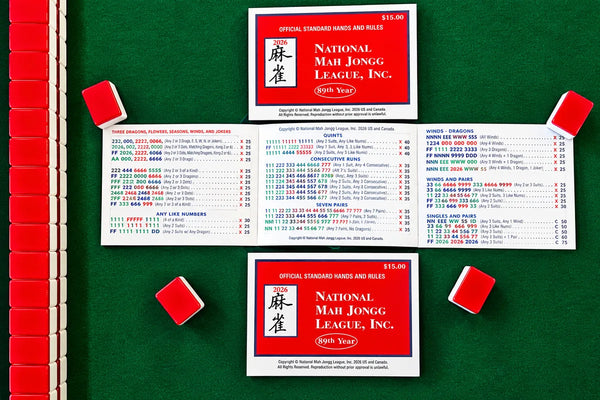
Keep a current card handy while you learn the pairings: the 2026 National Mah Jongg League card marks every dragon hand clearly, and drilling the pairings against real hands is faster than memorizing a chart. A full tile set like the complete American mahjong set gives you all twelve dragons to practice sorting.
Learn the Pairings Once, Use Them Forever
Red with craks, green with bams, white with dots, and the soap doubles as a neutral zero. That is the complete system. Drill it against a real card for a few games and you will never misread a dragon hand again.
Keep your card current, your tiles sorted, and the pairings will take care of themselves.
Shop this post
Dragon Questions
Which dragon goes with dots in mahjong?
The white dragon, nicknamed the soap, pairs with dots. When a hand shows dots and asks for the matching dragon, play soaps. The full pairings are red with craks, green with bams, and white (soap) with dots.
Which dragon goes with bams?
The green dragon pairs with bams. If your hand is built on bams and calls for a matching dragon, it wants greens. The 1 bam tile often depicts a bird, but it is still a bam and its dragon is still green.
What does it mean when the card says "matching dragon"?
It means the dragon that belongs to the suit shown in that grouping: red for craks, green for bams, white for dots. Check which suit sits in the same color group on the card, then play that suit's dragon.
Can a soap be used with any suit?
Only when it is used as a zero. In year hands, the soap stands in for the 0 and becomes neutral, meaning it can sit alongside any suit. When a soap is acting as a dragon, it belongs with dots.
Do the card's printed colors tell me which suit to play?
No. The blue, red, and green colors on the NMJL card show suit consistency, not actual suits. One color means all groupings share one suit; two colors means two different suits; three colors means three suits. You choose which real suits to play.
How many dragons are in an American mahjong set?
Twelve: four red, four green, and four white (soap). There are four of every tile in the set, which is why a pung of dragons needs three and a kong needs all four.